
Pyramid Metronome Model 7
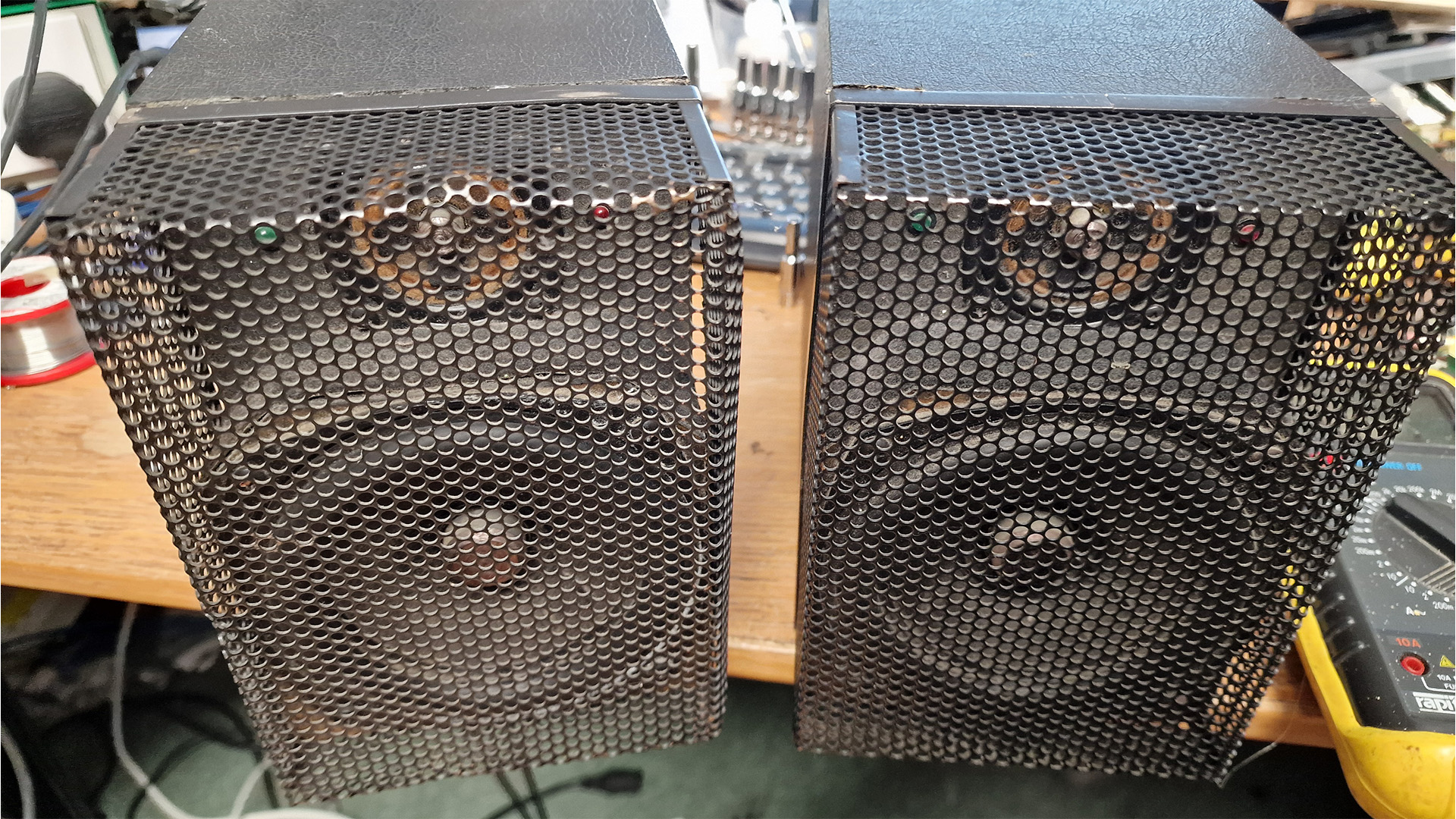
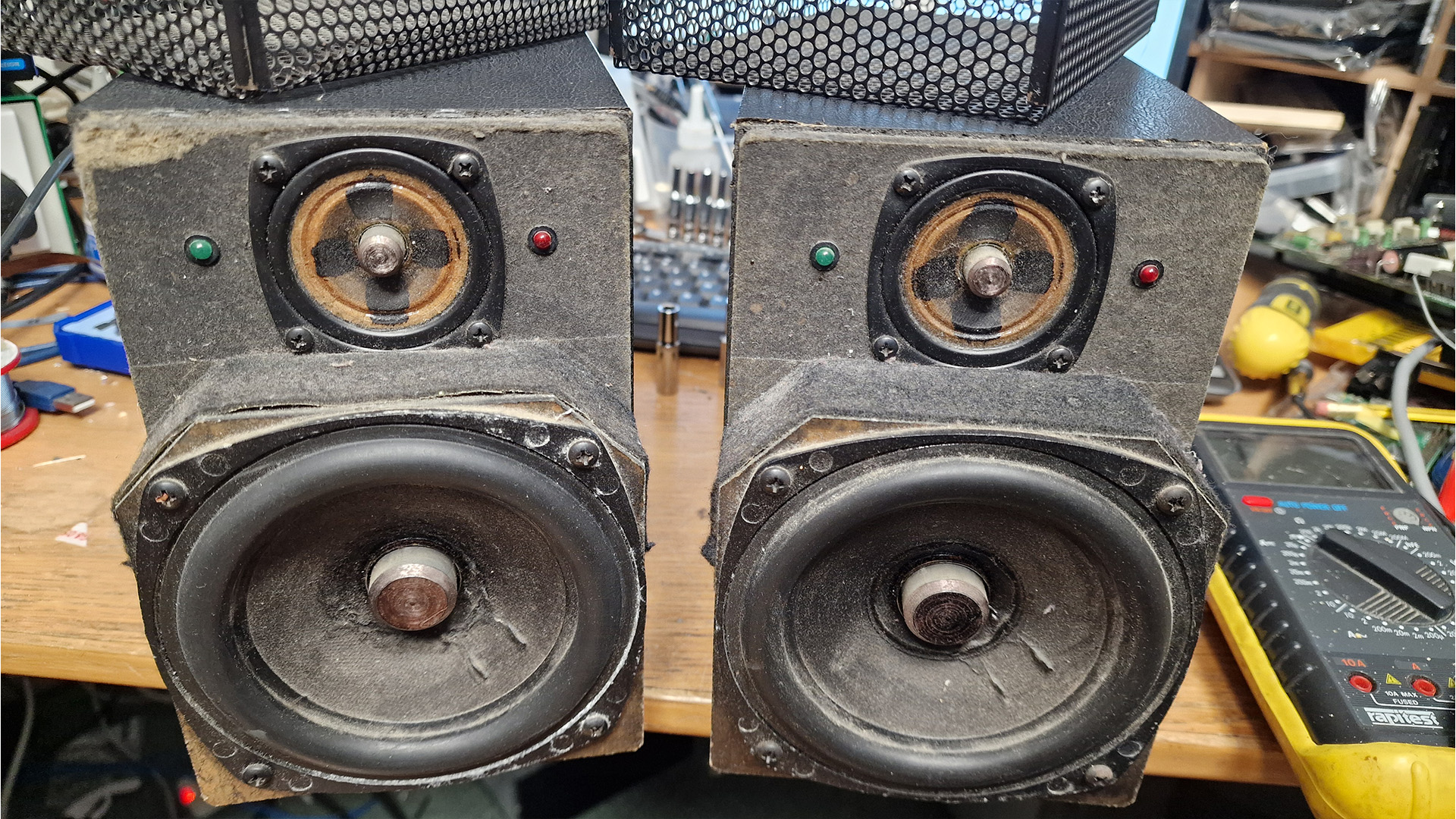
Two way bookshelf speaker designed by Dick Sequerra.
Distinctive metal grills.
Serviced October 2025
SN 14579 - working - 4ohm measured across input terminals
SN 14505 (possibly 14565) - failed - open circuit mesasured across terminals
Construction
Mainly glued cabinet. Only access through driver. Wadding material cut sheet fibrglass. Polyester wool?
Crossover
Coil: No markings. Continuity tested OK.
Film Capacitor: Capacitance 2.2 µF (K = ±10% tolerance)
- PROCOND - Brand/manufacturer series
- 2.2K - Capacitance 2.2 µF (K = ±10% tolerance)
- 250V~ 250 V AC rated (often ~400 V DC equivalent)
- MK T - Metallized polypropylene film capacitor
Resistor: Colber
3.3ohm, 5%, 7W
Driver Units
Tweeter: Voice coil TBC. Manufacture TBC
Bass/Mid: Voice coil OK. Manufacture TBC
Peak level detection circuit for Red/Green LED
Breadboard - stripboard
Left to right:
Resistor 1: TBC
Resistor 2: TBC
Diode 1: TBC
Diode 2: TBC
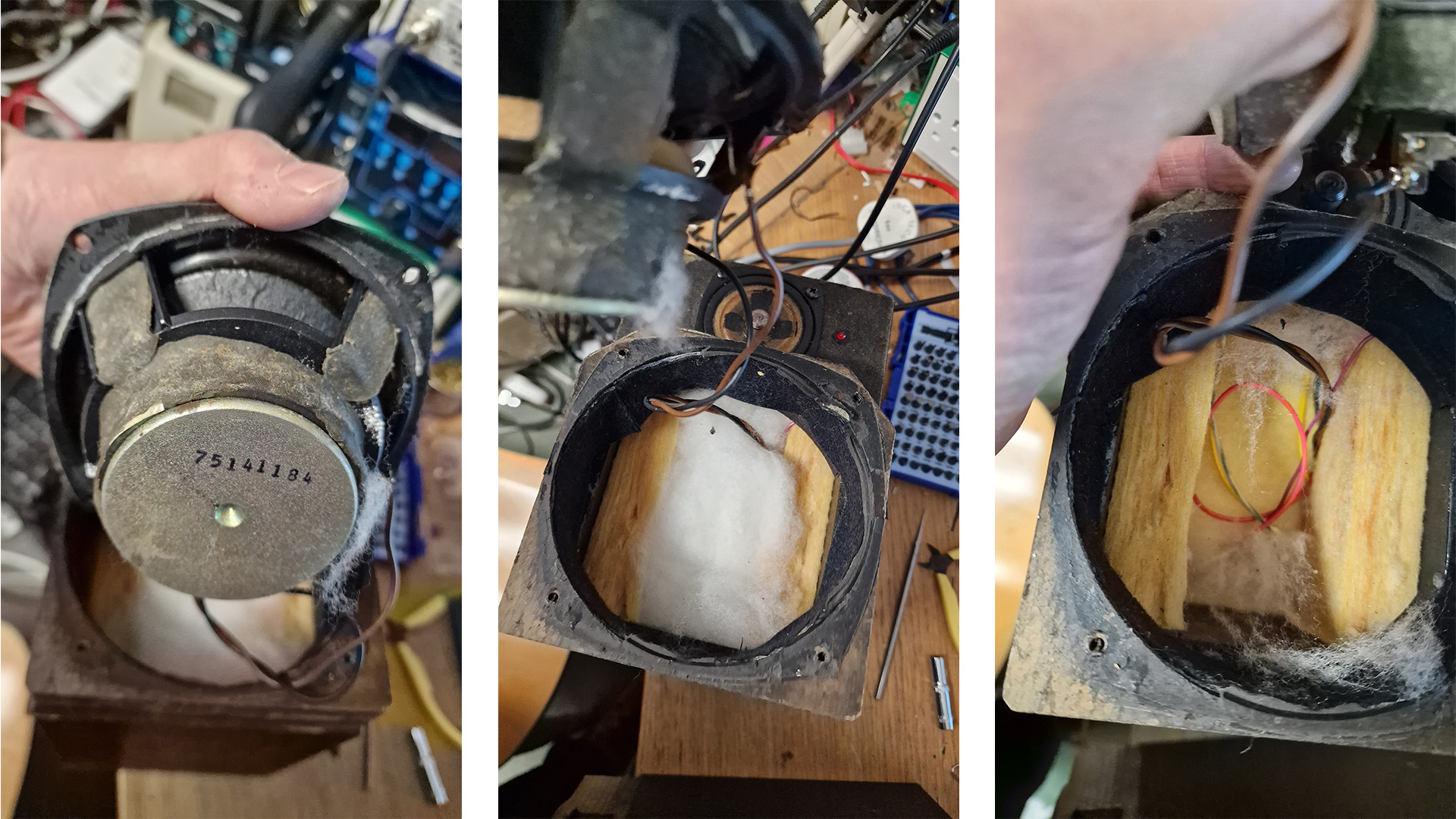
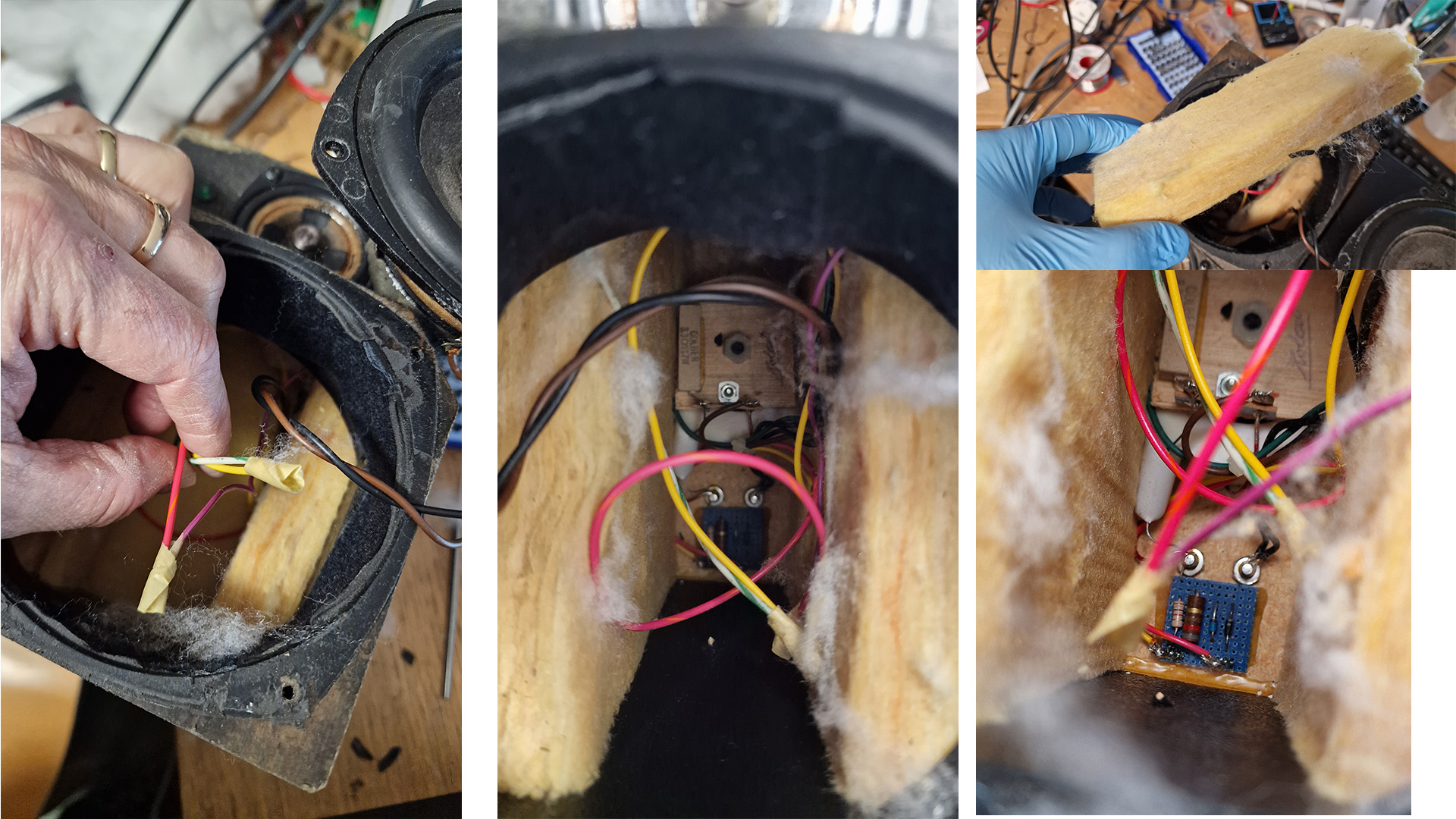
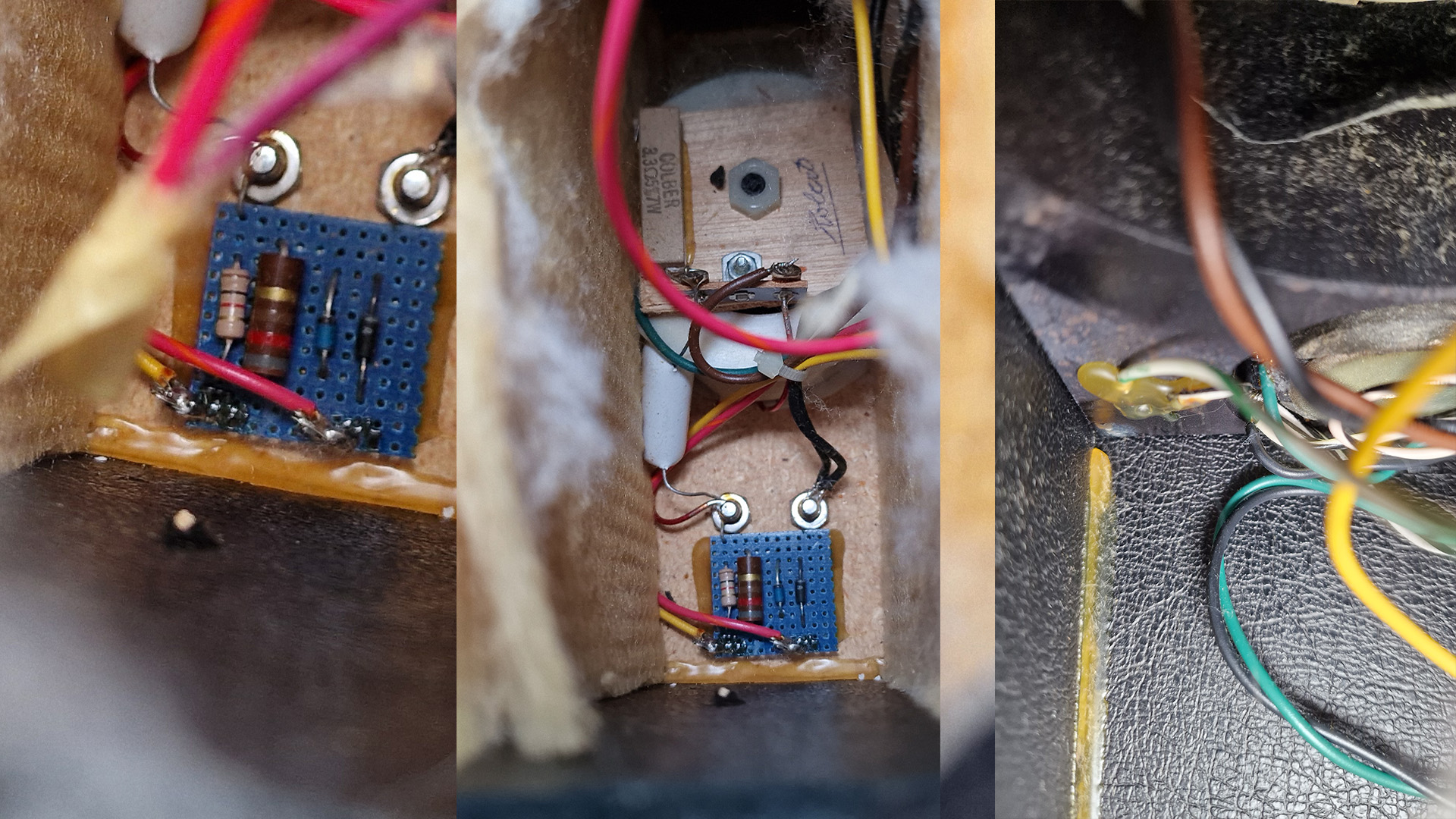
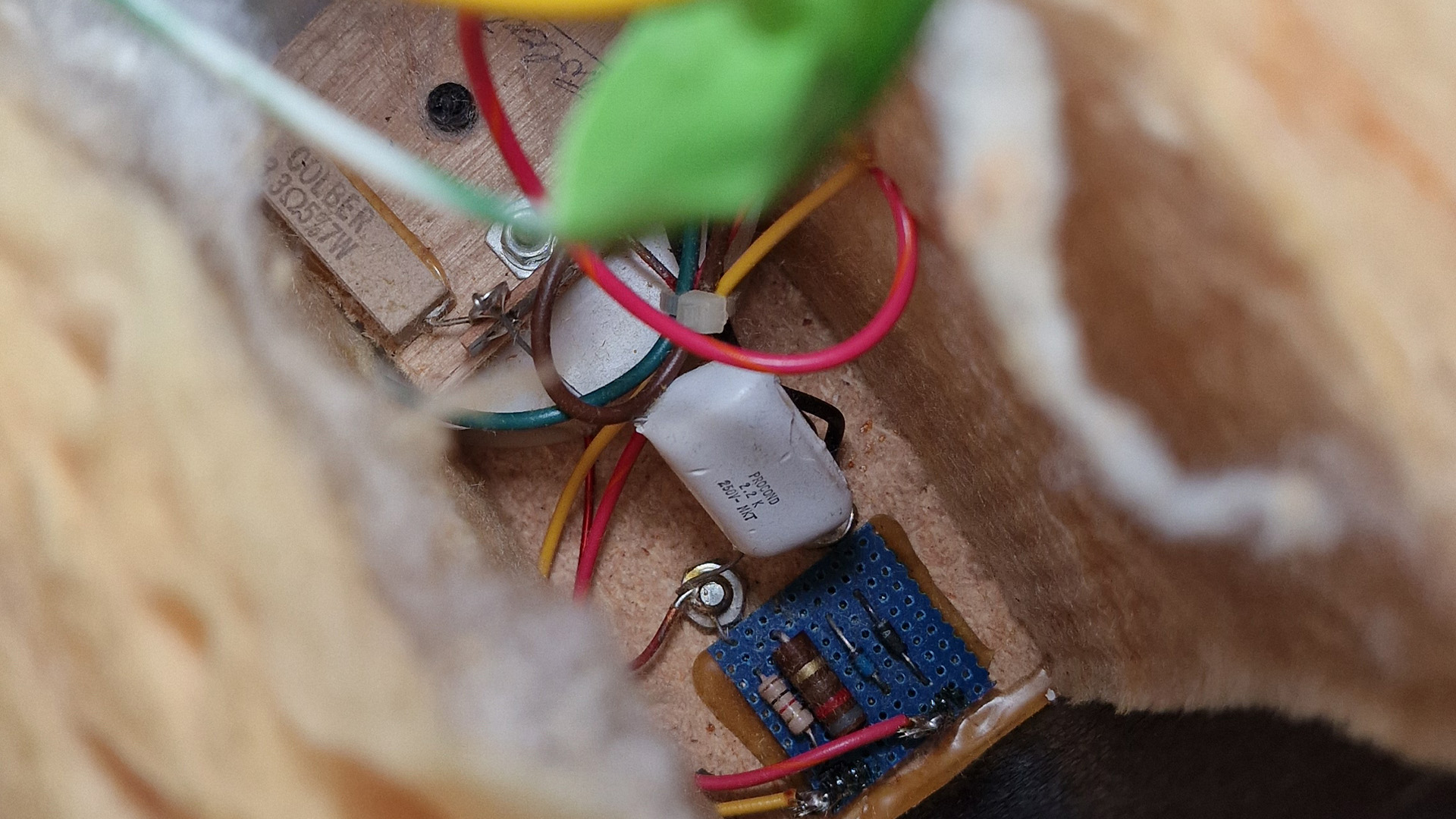
Cut the rear panel out to provide access to internal components.
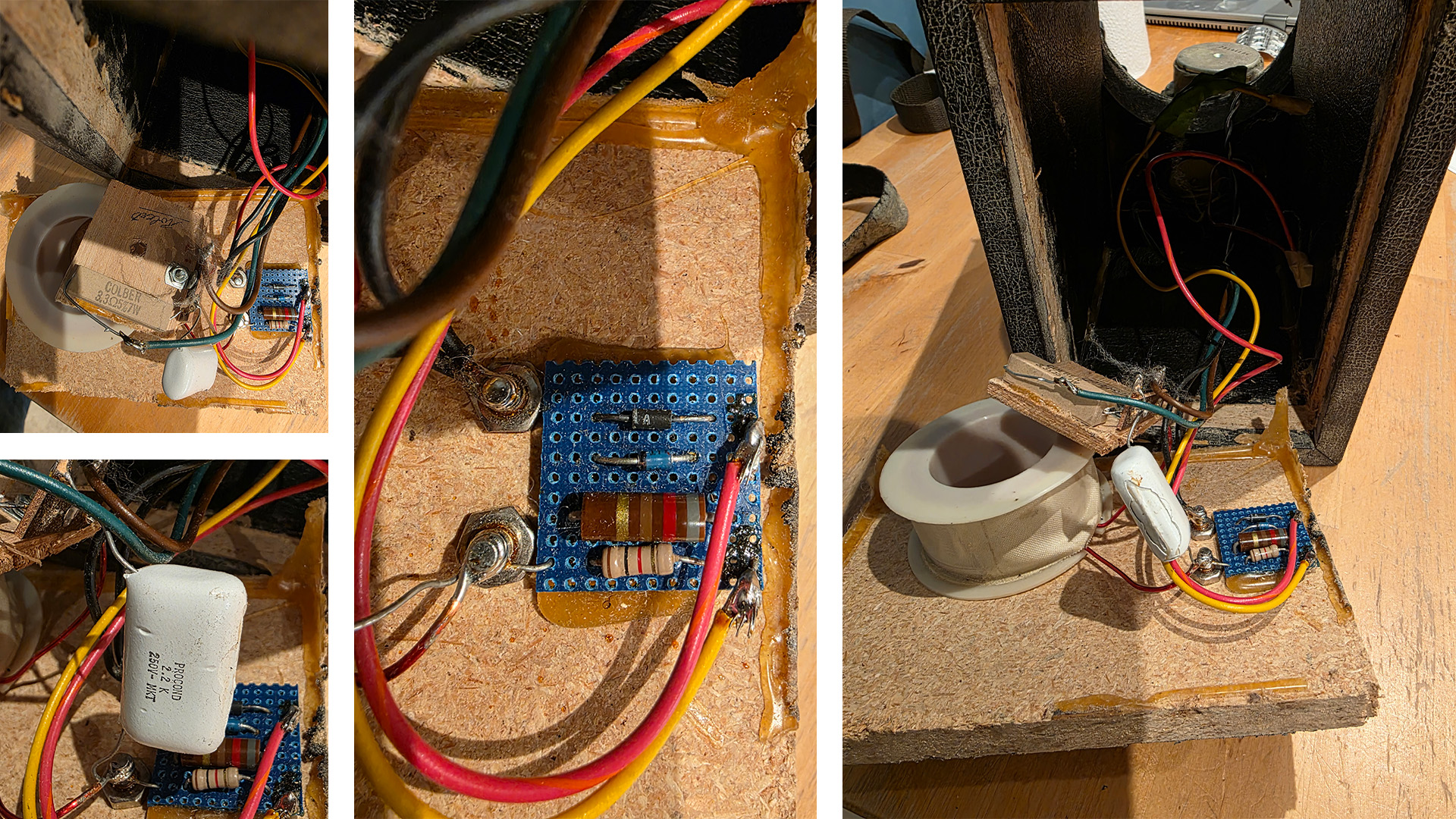
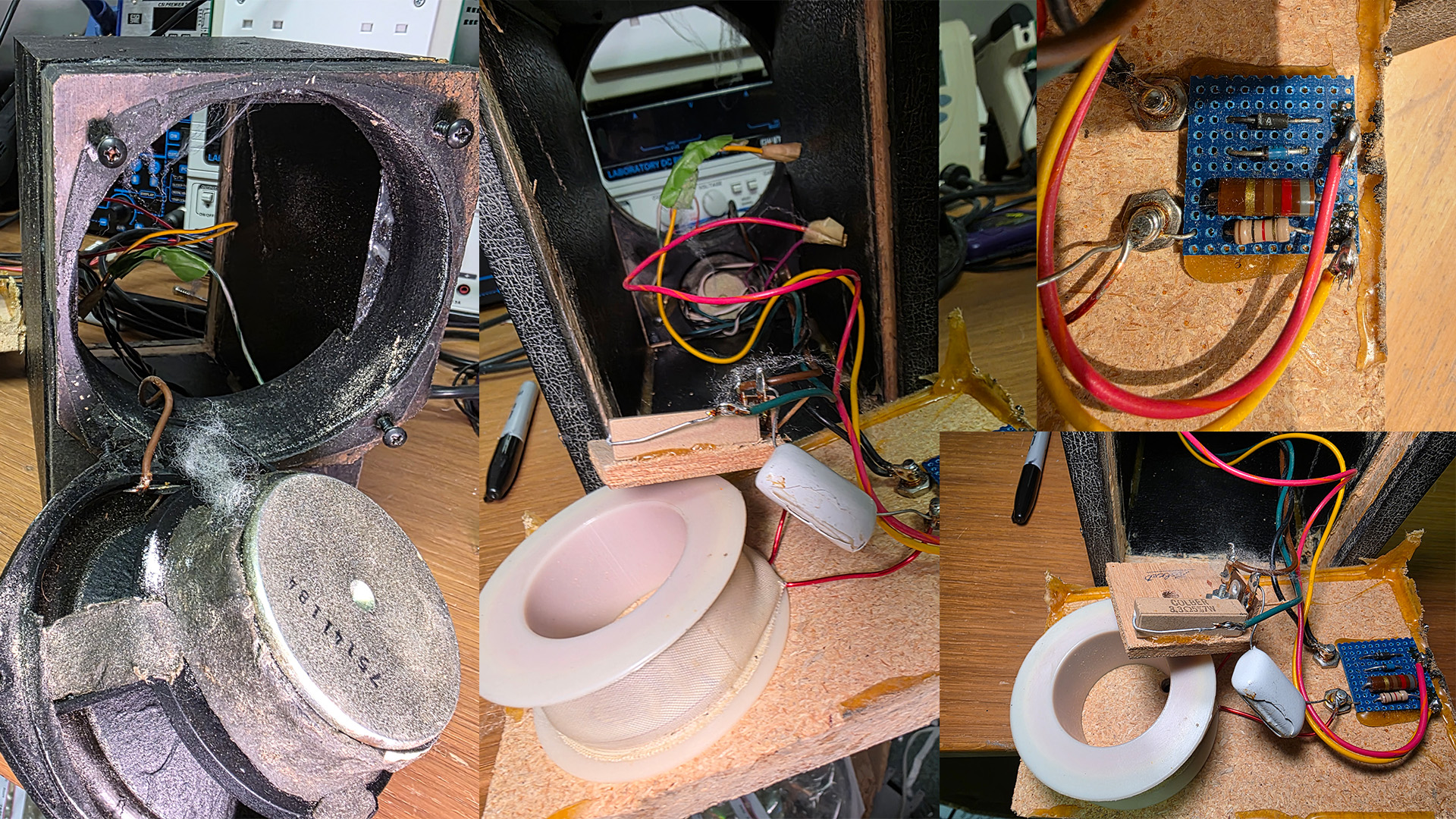
Crossover Design
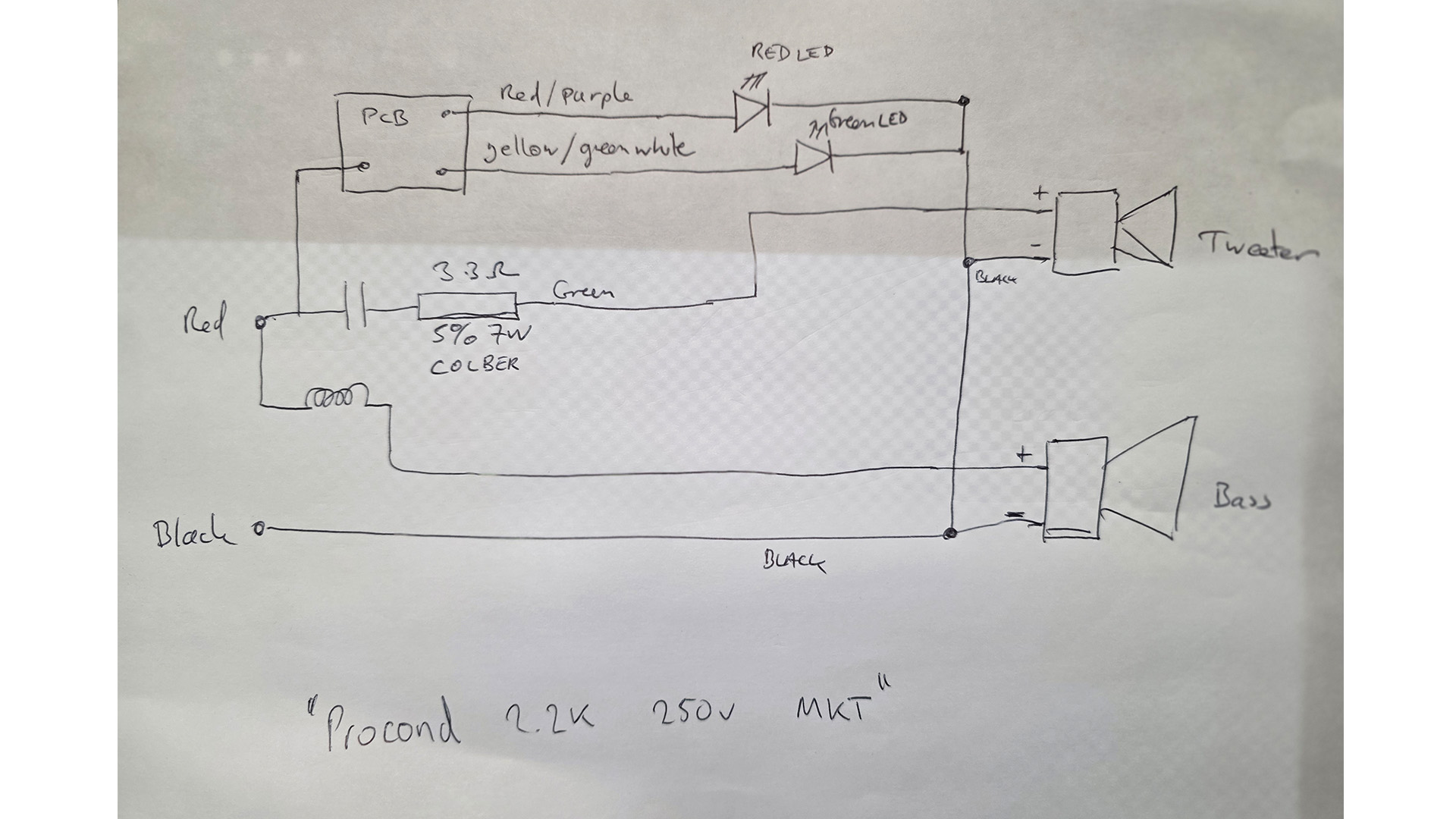
Resistor: 3.3ohm Colber 5% 7w
Capacitor: "Procond 2.2k 250v MKT". Suitable replacement Mouser part 80-C4GAFUC4220AA0J / Kenet C4GAFUC4220AA0J / Film Capacitors 400volts 2.2uF 5%
Inductor: Unknown
Conclusion
This is a speaker of it's time. It was never designed to be serviced:
- The cabinets/drivers/pcbs are all glued.
- Internal wires are 'birdsnest' wired
- Insulation tape is used to join internal twisted cables.
- Fibreglass is used to internal dampen the cabinets.
The reason one of the speakers had failed was a dry joint on the main driver and a faulty internal cable and a degraded capacitor.
The only way to access the crossover is to cut the back panel out of the speaker and then re-glue when done - so not a very satisfying or elegant repair.
It was also very time consuming repair - so not really economically viable.
My recommendation: Spend your money on a new pair and enjoy the memories....